 Ultimate guide
7 Questions to Ask Before Buying Woodturning Art as an Investment
Last Updated: October 26, 2026
Quick Summary
For most buyers, woodturning art is not a good investment in the financial sense; it is a passion purchase first and a store of value second. A handcrafted vessel can hold its value and enrich a room for decades, but it is not a stock, bond, or liquid asset. Treat any appreciation as a bonus, never a plan.
- Value rests on four drivers: maker, material, method, and provenance, weighed in that order.
- Compare completed sales, not asking prices, and apply discounts for condition, documentation gaps, and liquidity.
- Standard homeowners policies may sublimit fine art, so schedule valuable pieces on a rider.
- Keep pieces out of direct sun and away from vents, radiators, and doors where humidity swings.
- Gallery commission, auction fees, and shipping all come out of the gross resale price.
Table of Contents
- Is Woodturning Art a Good Investment? Start With the Honest Answer
- What Makes Woodturned Art Valuable
- How to Evaluate Wood Art Before You Buy
- Collecting Woodturned Bowls: Building a Collection That Holds Together
- Woodturning as a Business vs. Buying It as an Asset
- The Costs Nobody Budgets For: Ownership, Insurance, and Preservation
- Woodturning Art Compared With Other Investments
- Choosing a Piece That Fits Your Space and Your Goals
- Frequently Asked Questions
Is Woodturning Art a Good Investment? Start With the Honest Answer
Is woodturning art a good investment? At DGK Design, we would rather tell you that plainly than sell a fantasy of guaranteed appreciation: a handcrafted vessel can hold its value and enrich a room for decades, but it is not a stock, a bond, or a liquid asset.
That distinction matters because the market blurs it constantly. The IRS guidance on capital assets and collectibles treats tangible collectibles differently from securities, and that tax treatment alone should tell you this is a different kind of holding.
Below, we break down what drives value in a turned vessel, how to run due diligence before you buy, and where the real costs hide.
What Makes Woodturned Art Valuable
Value in woodturned art rests on four things: who made it, what it is made of, how it was made, and where it has been. A bowl is not valuable because it is a bowl. It is valuable because a specific maker shaped a specific material with specific skill, and that story can be documented and, crucially, resold.
Woodturned art is the practice of shaping wood on a lathe into vessels, bowls, and sculptural forms where craftsmanship, material, and design determine worth. The lathe is the tool; the value comes from the hand guiding it.
Buyers who ask "what makes woodturned art valuable" expect a single answer; there isn't one. A plain domestic-wood bowl by an unknown turner and a segmented, dyed-veneer vessel by a recognized artist can share a silhouette and sit a world apart in price.
The Four Value Drivers: Maker, Material, Method, Provenance
We weigh four drivers in this order:
- Maker: An established artist reputation with a documented body of work commands more than an anonymous piece. Signature, maker's mark, and exhibition history all count. A recognized name is the single strongest predictor of resale demand.
- Material: Figured grain, rare species, and stable, well-seasoned timber raise value. Sustainable sourcing from managed plantations is increasingly part of the story buyers pay for, but rarity of species matters less than stability of the piece.
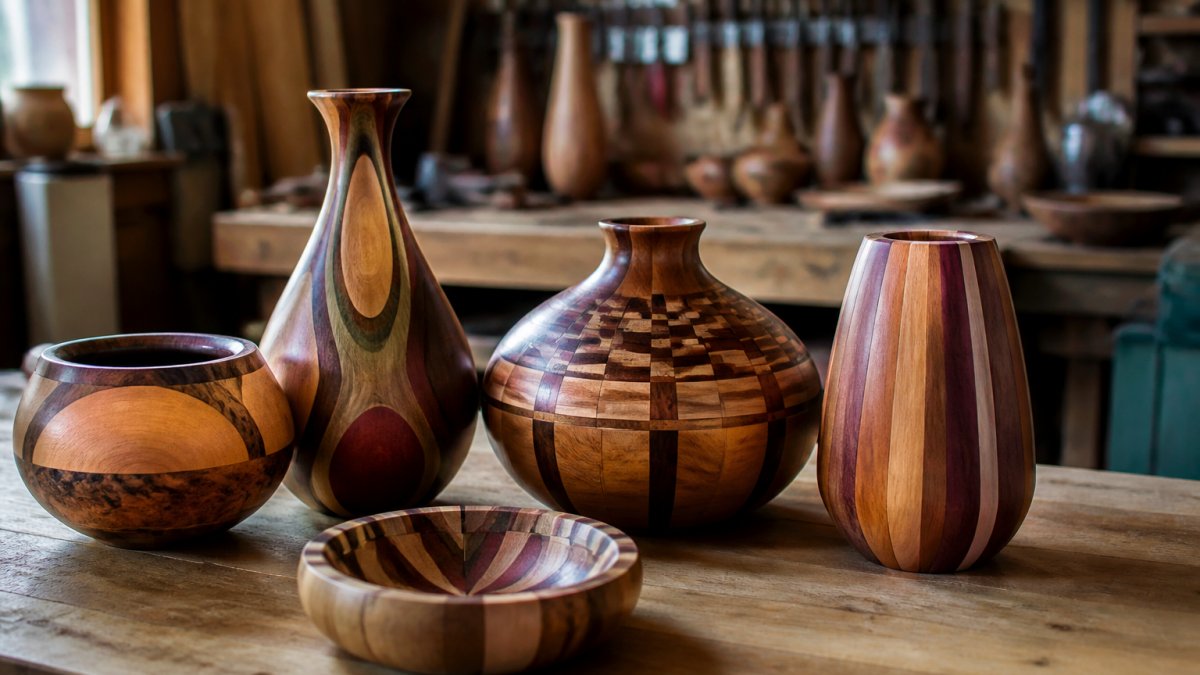
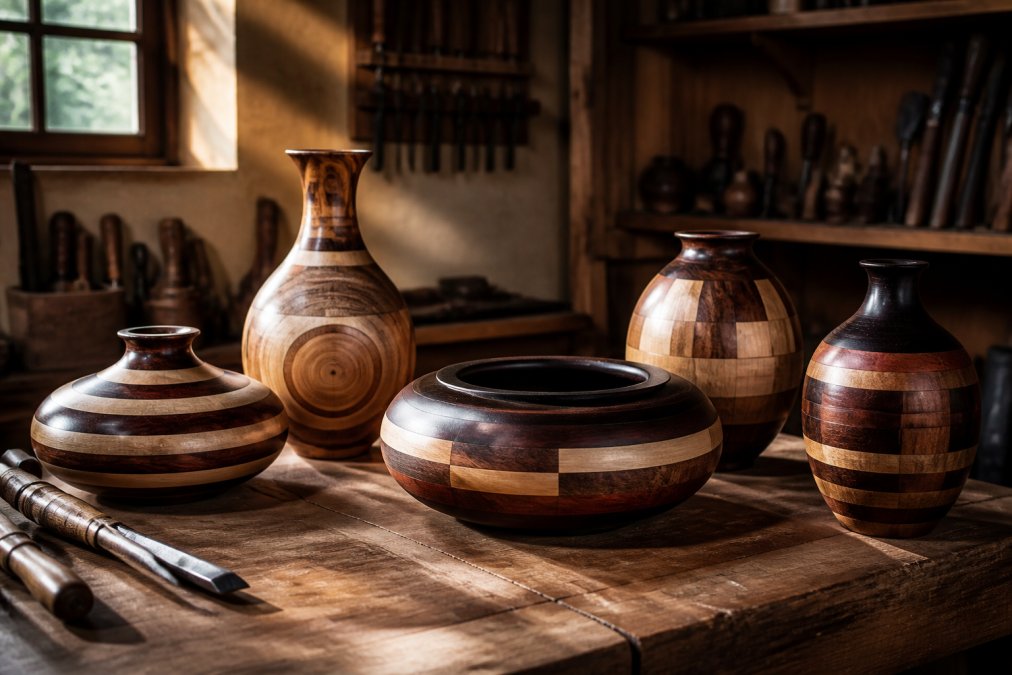
- Method: Segmented construction, polychromatic dye work, and hollow forms that require precision and patience signal skill. A thin, even wall is hard to fake and easy to verify on inspection.
A piece strong on all four holds value best; one strong on only one is decor, not a collectible.
How Those Drivers Become a Resale Price
The four drivers produce a range, not a list price, and the range narrows only when you can point to completed transactions rather than asking prices.
A practical valuation sequence:
- Find the maker's comparable sales. Look for the same artist's work sold at auction, through galleries with published results, or in listings that disclose final sale prices. Asking prices are aspirational; completed sales are evidence. Treat any listing without a sold price as a data point about supply, not value.
- Adjust for size, technique, and date. A large segmented hollow form is not comparable to a small open bowl by the same hand. Earlier or signature-period works often carry a premium.
- Discount for condition. Cracks, checks, finish loss, and fading are permanent value impairments in wood. A piece with a stable crack may sell at a meaningful discount to a clean example, and some buyers will not bid at all.
- Discount for documentation gaps. Missing provenance forces the buyer to assume risk, and buyers price that risk in.
- Apply a liquidity discount. Woodturned art has a thin secondary market. Even well-regarded work may take months to sell and may net less than the last retail price after fees.
What Actually Sells on the Secondary Market
Work by turners with museum, exhibition, or published-catalog histories resells more reliably than anonymous craft, and functional forms (bowls, platters) resell more easily than purely sculptural experiments because they have a broader buyer base.
That is the honest answer to "what makes woodturned art valuable": not a formula, but a documented maker, a stable piece, a verifiable history, and a realistic expectation that resale will be slower and cheaper than retail.
How to Evaluate Wood Art Before You Buy
How to evaluate wood art comes down to inspection and documentation, not gut feel. Run the same checklist every time.
Here is the due diligence checklist we would use before any significant purchase:
- Confirm the maker's identity, signature or mark, and body of work
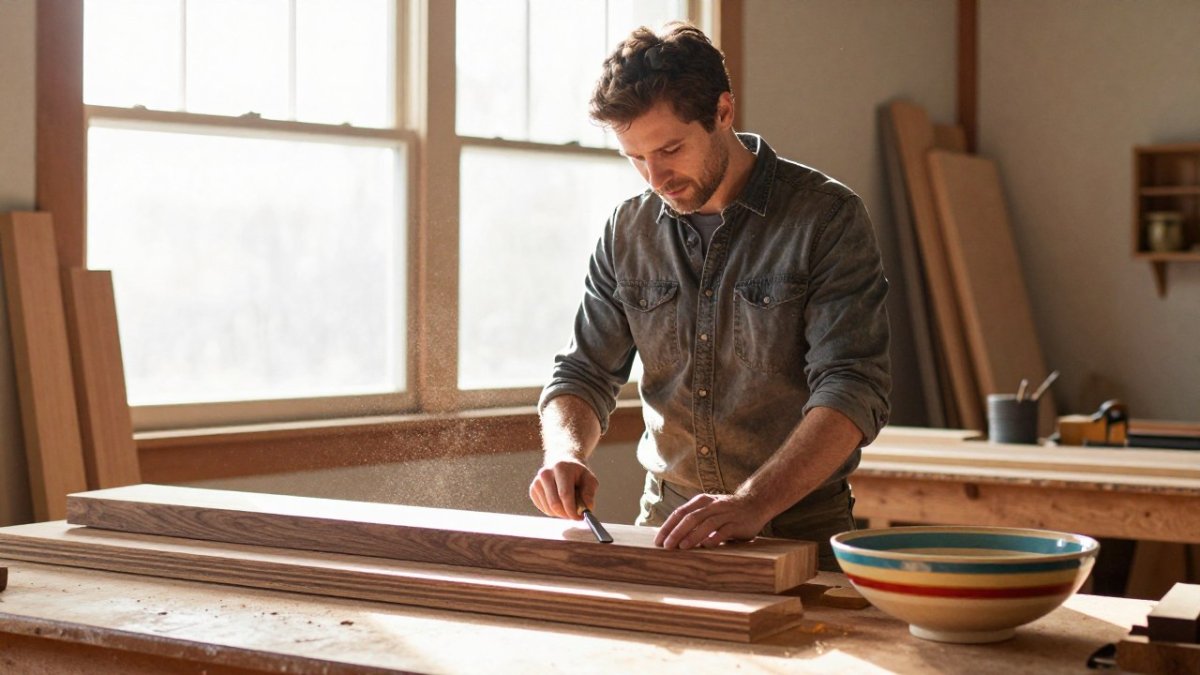
- Ask for the wood species and how the timber was sourced and seasoned
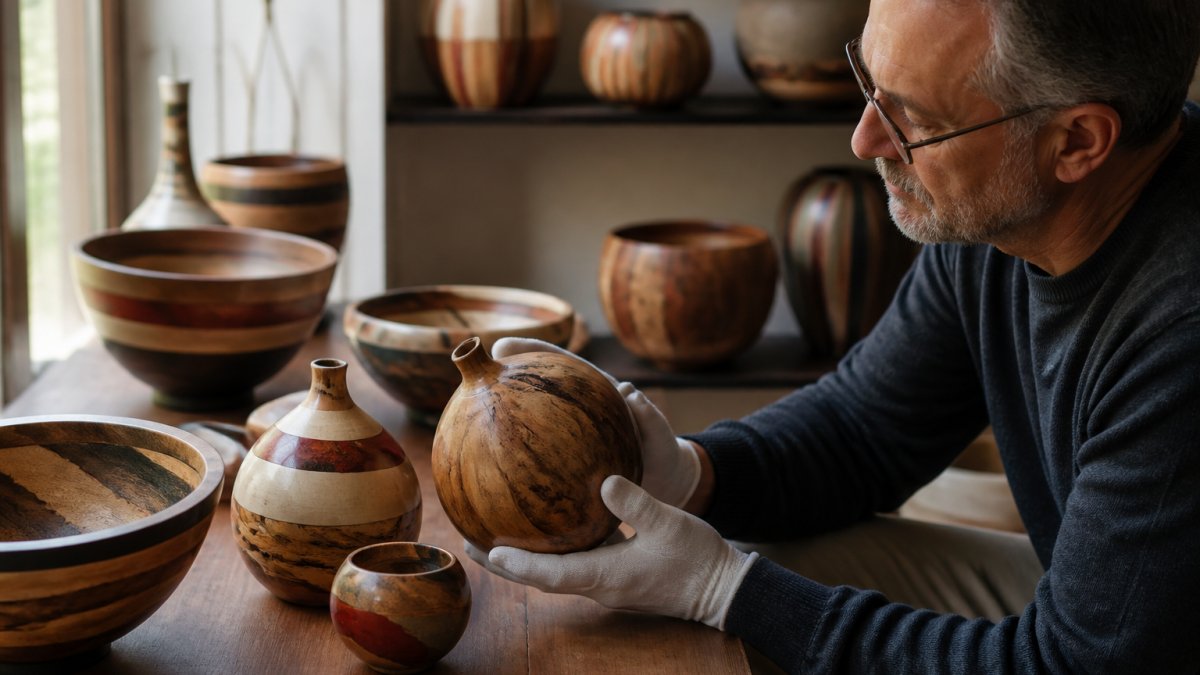
- Inspect wall thickness for evenness and check for cracks, checks, or unstable grain
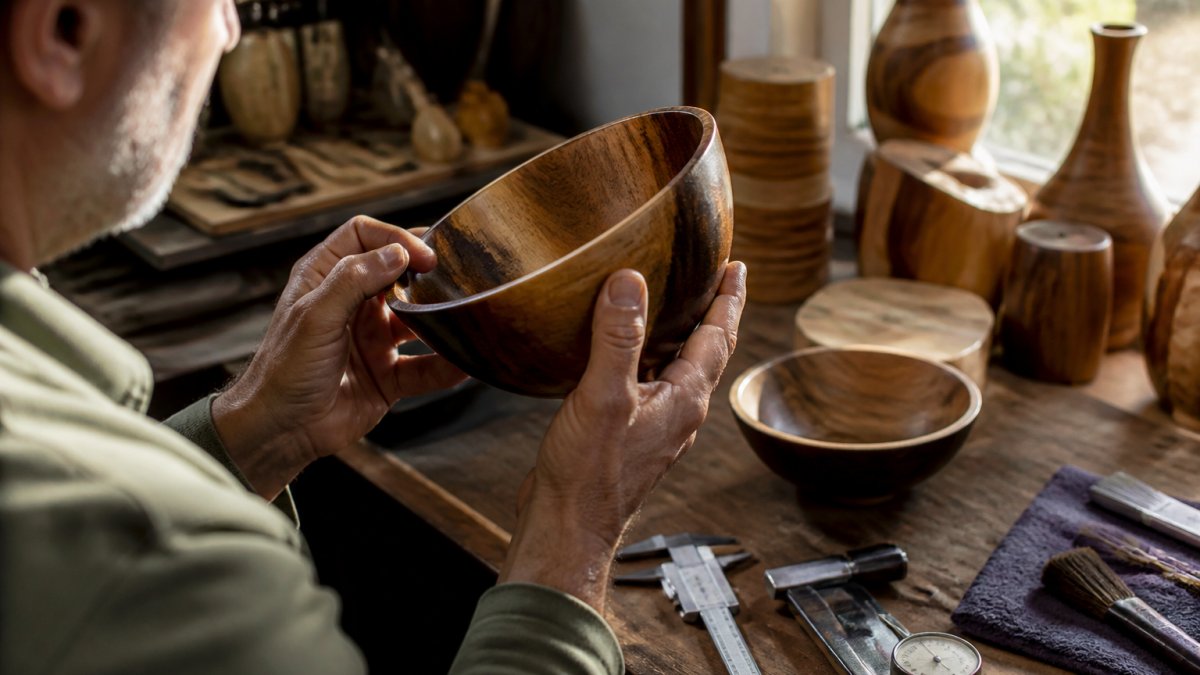
The checklist answers the two questions buyers ask most. "Will it last?" A well-seasoned, properly finished vessel can serve as an heirloom, but wood moves with humidity, so ask about seasoning and finish rather than accepting a blanket guarantee. "Is it really handmade?" Ask for process photos or video of the piece being turned.
Watch out: buying from a listing with no maker name, no material detail, and no return terms is the single most common way collectors overpay.
Collecting Woodturned Bowls: Building a Collection That Holds Together
Collecting woodturned bowls works best when you collect a theme, not a pile. Coherence separates a collection from an accumulation and gives it a story worth telling.
Pick an axis and stay on it: a single maker, a technique such as polychromatic turning, a cultural tradition, or a form like the hollow vessel.
Start with one anchor piece that represents the theme at its best, then add around it.
Woodturning as a Business vs. Buying It as an Asset
Woodturning as a business and woodturning art as an asset are two different financial questions, and conflating them is where people get hurt. A business generates income from sales, commissions, and repeat customers. An asset is a thing you own and hope to sell later for more.
If you are considering the business side, treat it like any small manufacturing operation: revenue comes from pricing, demand, and sales channels; costs from equipment, materials, and overhead.
Buying a vessel as an asset is a separate decision with a separate risk profile. The business can grow and pay you; the object mostly sits there. Be clear which one you are doing before you spend.
The Costs Nobody Budgets For: Ownership, Insurance, and Preservation
Ownership costs are the part of woodturning art investing almost no one plans for, and they quietly erode any return. They fall into four buckets, insurance, environment and preservation, conservation, and resale friction, each reducing the net proceeds you can expect.
Insurance: Coverage That Actually Pays
Standard homeowners and renters policies typically cap coverage for valuable personal property and may exclude or sublimit fine art and collectibles. For a piece of meaningful value, the usual route is a scheduled-items rider or standalone valuable-items policy listing the object, its value, and its documentation.
What insurers commonly ask for:
- A description, dimensions, and photographs of the piece
- The maker's name and any signature or mark
- Purchase receipt or a professional appraisal
Insurers commonly require an appraisal for higher-value pieces and periodic updates. Budget for the appraisal, and expect the premium to scale with declared value. If a piece is not scheduled, assume it is underinsured.
Environment and Preservation: The Slow Cost
Wood moves, absorbing and releasing moisture with changes in relative humidity, which is why a well-seasoned, properly finished vessel can last generations while a poorly sealed one cracks. Preservation costs are mostly behavioral, but real:
- Light: Keep pieces out of direct sun. Ultraviolet light fades dyed surfaces and shifts the color of many species. UV-filtering glass or display cases reduce the damage but do not eliminate it.
- Humidity: Stable indoor conditions matter more than any single number. Avoid placing pieces near heating vents, radiators, fireplaces, or exterior doors where humidity swings are largest.
- Cleaning: Dust with a soft cloth. Avoid harsh cleaners and solvents that strip finish. For finished pieces, a slightly damp cloth followed by drying is usually enough; for oiled pieces, follow the maker's care instructions.
Conservation: When Routine Care Is Not Enough
Cracks, checks, finish loss, and structural movement turn a modest ownership cost into a significant one. Conservation-grade treatment by a professional conservator is not routine cleaning and is priced accordingly.
A practical rule: for a piece you intend to resell, get an opinion before attempting any repair yourself. Amateur repairs, glue squeeze-out, sanding a crack, refinishing a dyed surface, can reduce value more than the original damage.
Resale Friction: The Cost That Decides the Return
Selling a single vessel means finding a buyer, and each channel takes a cut:
- Gallery consignment: The gallery typically retains a commission on the sale price, and the piece may sit for months. The commission is the price of access to qualified buyers.
- Auction: Buyer's premium and seller's commission both apply, and the hammer price is not what the seller nets. Auction is best for work with an established comparable-sales record.
- Direct or online sale: Lower fees but a smaller, slower buyer pool and more of your own time. Shipping a fragile vessel safely adds packing and insurance cost.
Add these up and the arithmetic is clear: insurance premiums, appraisal, conservation reserves, and selling costs all come out of the gross resale price before you see a return. That is why we treat appreciation as a bonus rather than a plan. Ownership costs are not a reason to avoid woodturned art, they are a reason to buy pieces you will genuinely enjoy owning, because the enjoyment is the return you can count on.
Woodturning Art Compared With Other Investments
Woodturning art compared with other investments is a matter of liquidity, risk, and purpose, and on those measures it is a different animal. Stocks and bonds trade in seconds; a turned vessel may take months to sell and may sell below what you hoped.
| Investment | Liquidity | Income | Main Risk | Best For |
|---|---|---|---|---|
| Woodturned art | Low | None | Thin resale market, condition | Enjoyment plus modest value retention |
| Stocks and funds | High | Dividends | Market volatility | Growth and liquidity |
| Bonds | High | Interest | Rate and inflation risk | Stability and income |
| Real estate | Low | Rent | Illiquidity, upkeep | Long-term appreciation |
The table tells the story. If you need the money back on demand, woodturning art is the wrong vehicle.
Choosing a Piece That Fits Your Space and Your Goals
The best piece fits both your room and your reason for buying.
Then match the piece to the room. Measure the shelf, table, or niche before you fall for a silhouette online.
At DGK Design, we build each vessel through polychromatic woodturning and segmented construction, using domestic and exotic woods and dyed birch veneers, with sustainable timber from managed plantations.
Frequently Asked Questions
Does woodturned art appreciate in value?
Some pieces do, but appreciation is not automatic. Value tends to rise when the maker has a documented exhibition record, the piece is an early or signature work, and the wood or technique is hard to replicate. Works by unknown makers usually resell at or below the original price. Treat woodturning art as a long-term holding you enjoy first, and ask the seller for provenance and any prior sale records before assuming it will grow in value.
What should collectors look for when buying woodturned bowls?
Check four things: the maker's reputation and body of work, the wood species and how the grain is oriented, the quality of the finish and wall consistency, and the paperwork that documents the piece. Ask whether the bowl is meant for display or daily use, since functional pieces show wear faster. A signed piece with a dated record and a clear care history is easier to insure and easier to sell later than an unmarked one.
Can you make money woodturning, and is that the same as investing in it?
They are different activities. Woodturning as a business earns income from selling pieces, teaching, or commissions, and it carries equipment, material, and overhead costs that shape your profit margin. Buying woodturning art as an investment means holding a finished piece and hoping its market value rises. A turner can run a profitable business while the pieces themselves do not appreciate, so keep the two sets of numbers separate.
How should I care for woodturned art so it keeps its value?
Keep pieces out of direct sunlight and away from radiators, which dry and crack the wood. Maintain indoor humidity in a stable range and dust with a soft cloth rather than solvents. Display pieces need occasional re-oiling with a product the maker recommends; functional bowls should be washed by hand and dried promptly. Keep the original documentation, and photograph each piece for insurance. Good condition records make a resale far easier.
The challenge with buying woodturning art as an investment is separating genuine craftsmanship from marketing, and that takes a maker willing to show their process and stand behind their work. At DGK Design, we turn each vessel by hand using polychromatic and segmented techniques, source sustainable woods, and document what goes into every piece, so you know exactly what you are collecting. Get started with DGK Design and choose a vessel that earns its place in your home and your collection.