 blog
Best Handcrafted Wooden Gifts for Collectors: 2026 Guide
Table of Contents
- What Makes a Wooden Gift Valuable to a Collector
- Collectible Woodturned Vessels: Bowls, Vases, and Hollow Forms
- The Value of Polychromatic Woodturning in Today's Market
- Wood Species and Sourcing Ethics for Serious Collectors
- How to Care for Handcrafted Wooden Decor and Heirloom Vessels
- Gift Ideas for Specific Collector Niches
- Investment Value of Handcrafted Wood: What Appreciates Over Time
- Frequently Asked Questions
Last Updated: September 23, 2026
What Makes a Wooden Gift Valuable to a Collector
A handcrafted wooden vessel becomes collectible when three things converge: the maker's skill, the story of the wood, and a form that holds up to daily viewing. This guide from DGK Design breaks down what separates a true collector's piece from a decorative bowl, and how to shop for the best handcrafted wooden gifts for collectors in 2026.
Craftsmanship, Provenance, and Natural Grain
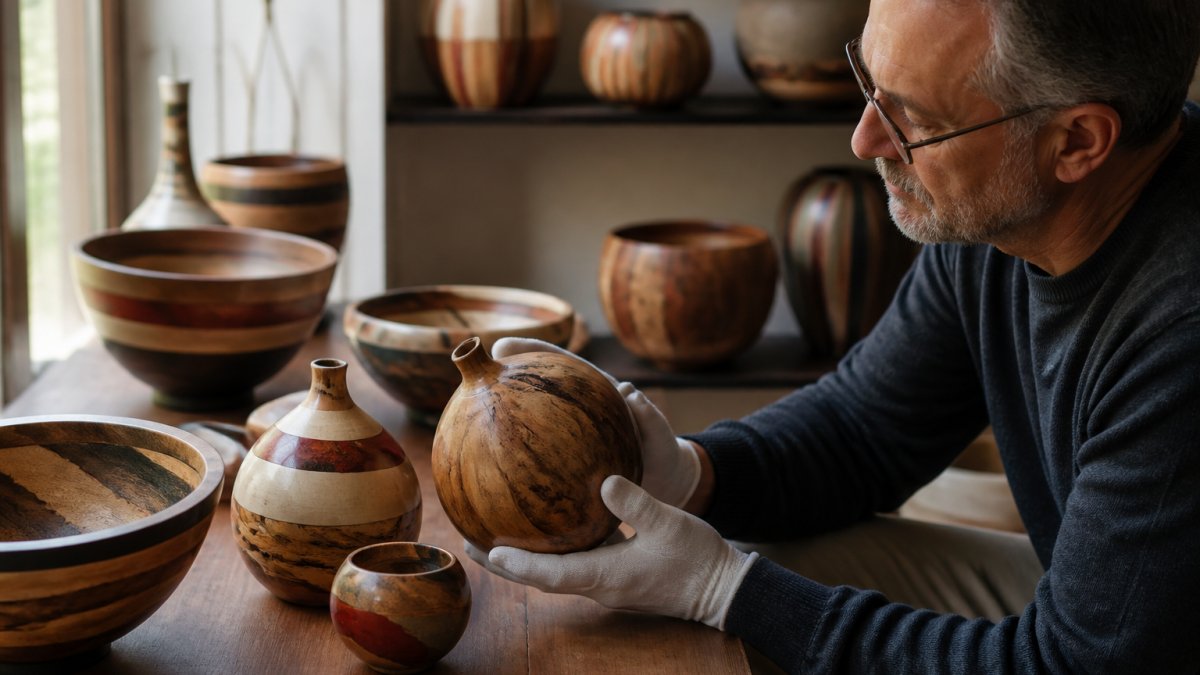
Craftsmanship is the first filter. A well-turned vessel has walls of even thickness, a base that sits flat without a wobble, and a finish that reveals the wood rather than hiding it. Run your finger along the rim; ridges or a gummy edge mean the piece was rushed.
Collectible Woodturned Vessels: Bowls, Vases, and Hollow Forms
Bowls, vases, and hollow forms are the core categories collectors return to, and each demands a different level of turning skill. A shallow bowl is forgiving; a tall hollow form with thin walls is not, and that difficulty is what collectors pay for.
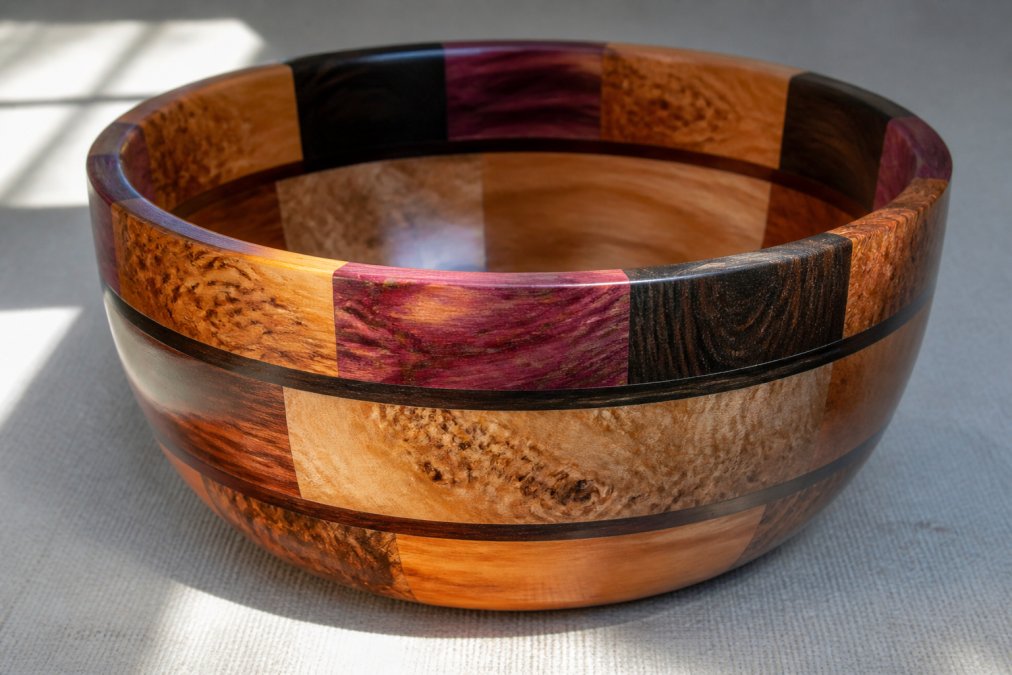
Here's how the three main forms compare:
| Form | Turning Difficulty | Display Use | What Collectors Look For |
|---|---|---|---|
| Shallow bowl | Moderate | Tabletop, serving | Even rim, stable base |
| Tall vase | High | Shelf, mantel | Thin walls, balanced profile |
| Hollow form | Very high | Pedestal, case | Small opening, uniform thickness |
The Value of Polychromatic Woodturning in Today's Market
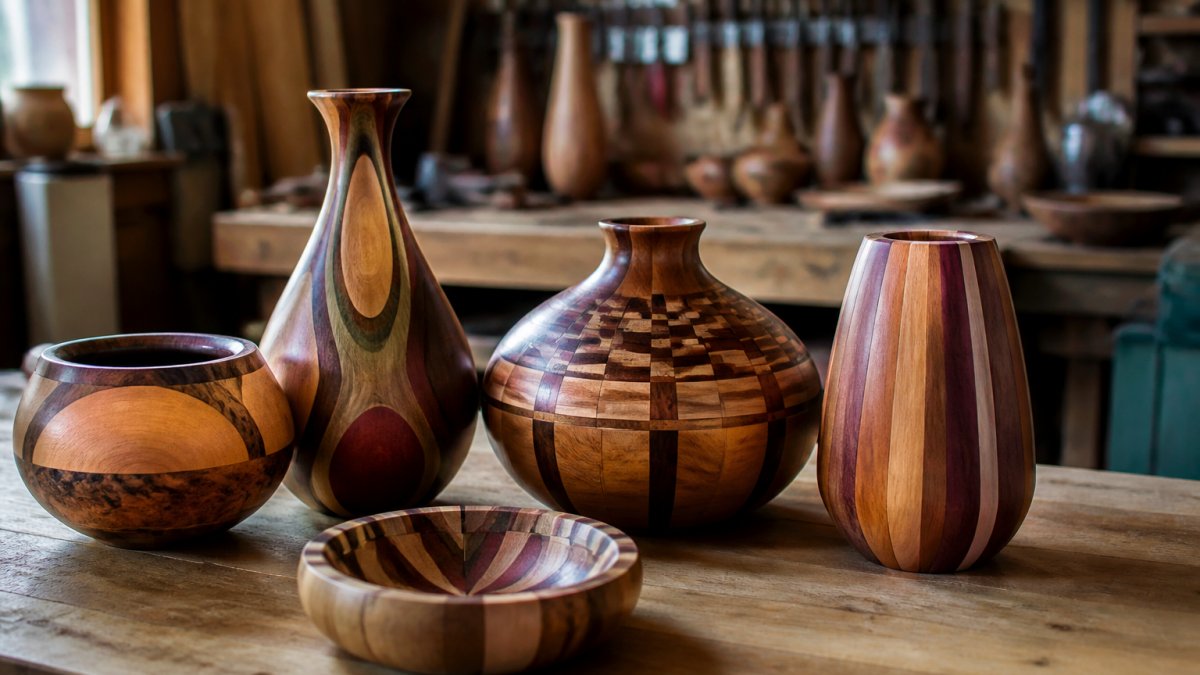
Polychromatic woodturning combines multiple colors, naturally contrasting species or dyed veneers, into a single turned form. It is one of the craft's most demanding techniques, and why these pieces stand apart on a shelf.
Why Segmented and Dyed Techniques Command Attention
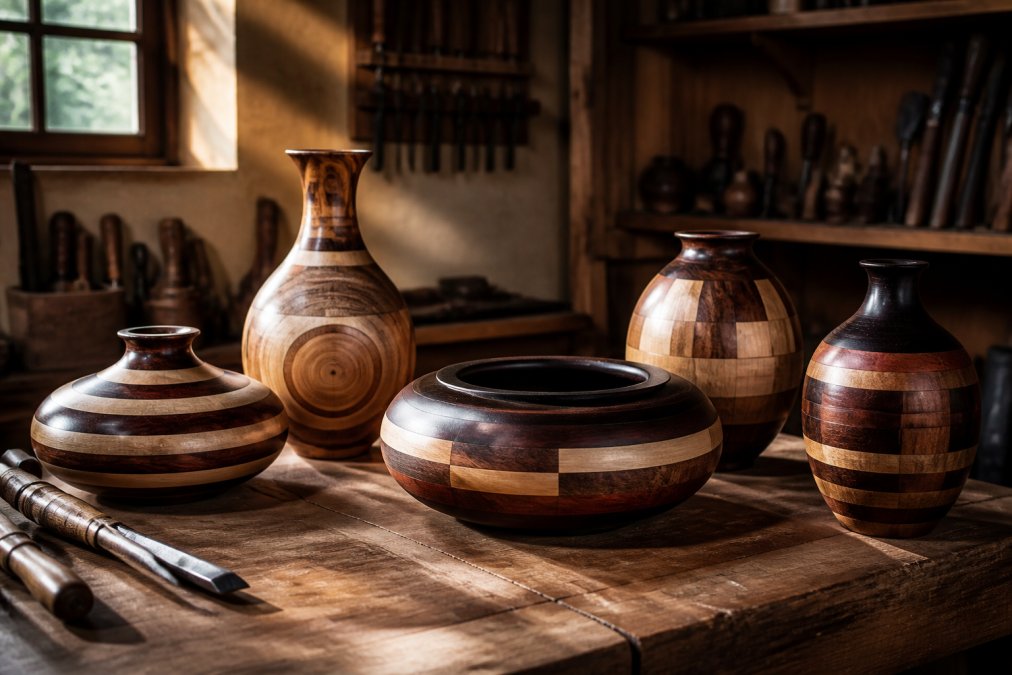
Segmented construction means the maker cuts and glues many small pieces into a block before turning it. Every seam is a potential failure point; misalign them and the piece cracks during turning or years later.
Wood Species and Sourcing Ethics for Serious Collectors
Species choice affects both the look and the ethics of a piece, and collectors increasingly ask about both. Here is how the common species differ.
Domestic hardwoods
- Black walnut: Deep chocolate-to-purple heartwood with straight-to-wavy grain. Turns cleanly, holds crisp edges, and darkens with age and oil. Prized for bowls and hollow forms because the color runs through the whole blank.
- Black cherry: Starts warm salmon-orange and deepens to rich reddish-brown with light exposure. Fine, uniform texture that takes a high polish, a favorite for pieces meant to age visibly on a shelf.
- Hard maple: Pale, dense, and close-grained. Often the base wood for dyed and segmented work because it accepts dye evenly and shows figure, curly, quilted, bird's-eye, without competing color.
- White oak: Open, ring-porous grain with pronounced ray fleck on quartersawn stock. Durable and traditional, but the open pores need a filling finish for food-contact pieces.
Imported and exotic species
- Olive wood: Creamy yellow-brown heartwood shot through with dark, erratic streaks. Dramatic figure, but often small-diameter and prone to checking, so large olive pieces are rarer and command more.
- Acacia: Warm honey-to-reddish tones with bold contrasting grain lines. Widely used for serving boards and trays; hardness varies by species, so ask which acacia.
- Bubinga: African hardwood with deep rose-to-red color and fine, sometimes flamed figure. Dense and heavy; it dulls tools quickly, which is why bubinga work signals a confident maker.
- Padauk and bloodwood: Vivid orange-red and deep crimson respectively. Striking in segmented pieces, but both fade toward brown with UV exposure, a consideration for collections near windows.
Reading the wood yourself
Sourcing ethics, in plain terms
"Sustainable" gets used loosely. Ask which of these applies:
- Managed plantation or farmed stock: Grown on purpose, harvested on a rotation. Common for acacia and some walnut.
- Reclaimed or salvaged stock: Wood from old buildings, fallen trees, or urban removals. Provenance is often the most interesting part of the story.
- Certified forest stock: Look for Forest Stewardship Council (FSC) chain-of-custody documentation if the maker claims it.
- CITES-listed species: Certain rosewoods and ebonies are restricted in international trade. A reputable maker will say so and can show paperwork.
Ask the maker four questions before you buy:
- Which species are in this piece, and where did each come from?
- Was the wood plantation-grown, reclaimed, or certified?
- If any species is trade-restricted, can you document the sourcing?
- How was the blank dried, and to what moisture content?
How to Care for Handcrafted Wooden Decor and Heirloom Vessels
Knowing how to care for handcrafted wooden decor separates a piece that lasts a generation from one that cracks in two years. Wood moves with humidity; your job is to slow that movement and keep the finish intact.
Follow this routine:
- Keep pieces out of direct sun and away from heating vents
- Dust with a soft, dry cloth, never a wet rag
- Re-oil food-safe pieces every few months with a food-grade oil
- Use a beeswax-based conditioner on display-only pieces once or twice a year
- Never soak wood or run it through a dishwasher
- Store in a stable, moderate-humidity room
Gift Ideas for Specific Collector Niches
Most gift guides stop at "barware collector" or "home decor collector." That is too broad to be useful. Real collectors cluster into narrow niches, and the gift that lands fits the niche, not the category. Here is how to match a piece to the person.
Wood-Turned Pen and Writing-Instrument Collectors
Pen collectors care about material, finish, and mechanism. A hand-turned wooden pen or display tray fits an existing collection without competing with it. Look for:
- Species that show figure at small scale: burl, spalted maple, and stabilized woods read best on a pen barrel.
- A matching display tray or pen rest in the same species, so the gift extends the collection rather than sitting beside it.
- A finish that survives handling: pen collectors use their pieces. A hard, hand-rubbed finish outlasts a soft oil on a handled object.
Vintage Tool and Workshop Enthusiasts
This niche collects the tools and the objects tools made. A handcrafted wooden mallet, marking gauge, or turned handle for a favorite chisel fits the shelf and the bench. Ask what the person uses versus displays, the two collections differ, and the gift should match the right one.
Barware and Cocktail Collectors
Barware collectors build around a ritual. Turned coasters, a serving tray, a bottle stopper set, and a muddler all extend it. Match the wood to the room: walnut and cherry for a warm, traditional bar; maple and acacia for a lighter, modern one.
Home Decor and Display Collectors
This collector buys for a specific surface. Before you choose, ask where the piece will live, console table, mantel, pedestal, lit case. A tall vase needs height clearance; a hollow form needs a pedestal or case to be seen properly. Scale and lighting decide whether a piece reads as a statement or gets lost.
Nature and Live-Edge Collectors
This niche wants the tree, not the technique. A live-edge or burl piece highlighting raw grain, bark inclusion, or a natural void is the right gift. The story of where the tree grew is often the point.
Kitchen and Functional Collectors
A charcuterie board, turned salad servers, or a carved spoon fits a collector who uses what they own. Food-contact pieces need a food-safe finish and a moisture-tolerant species, maple, cherry, and walnut are the workhorses.
Keepsake and Occasion Collectors
For weddings, anniversaries, and milestones, an engraved wood keepsake carries more weight than a generic registry item. A customized inscription on the base, a date, initials, or a short line, turns a vessel into a record of the occasion.
How to Choose When You Are Not Sure
Ask three questions before you buy:
- What does the person already display? Match the scale, species, and color of what is there.
- Is this a use collection or a display collection? The answer changes the finish and the form.
- What is the occasion? A keepsake should tie to a date or name; a niche gift should extend an existing set.
The best wooden gifts for collectors on these occasions fit an existing collection rather than starting a new one. A piece that complements what is on the shelf gets displayed; one that competes with it gets stored.
Investment Value of Handcrafted Wood: What Appreciates Over Time
Handcrafted wood appreciates when the maker's reputation grows, the technique is hard to replicate, and the piece is well documented. It is not a stock but a slow asset that rewards patience and careful storage.
Three factors drive long-term value:
- Maker reputation: work from an established artisan holds better than anonymous pieces
- Technique: segmented and polychromatic work is harder to reproduce than plain turning
- Condition: original finish, no cracks, and documented provenance all protect value
Frequently Asked Questions
What makes a wooden gift valuable to a collector?
A wooden gift holds collector value when it combines skilled craftsmanship with rare or distinctive materials. Look for pieces turned by hand rather than mass-produced, with visible natural grain, precise segmented construction, and a finish that protects the wood without hiding its character. Provenance matters too: knowing the artisan, the wood source, and the technique behind a piece adds context that supports long-term desirability among collectors of handcrafted wooden gifts.
How do I identify high-quality handcrafted wooden decor?
Check the seams where segments meet: tight, even joints signal careful work. Run your fingers across the surface; it should feel smooth without cloudy finish buildup. Look for consistent wall thickness and a base that sits flat. Ask whether the wood came from managed plantations, and request documentation if sustainability claims matter to you.
How should I care for handcrafted wooden vessels?
Keep collectible woodturned vessels away from direct sunlight and radiators, since heat and UV light dry out wood and fade dyed surfaces. Dust with a soft dry cloth weekly. For food-safe pieces, hand wash with mild soap and dry immediately; never soak or put them in a dishwasher. Re-oil functional bowls every few months with a food-grade mineral oil to prevent cracking. Display-only vessels need less frequent conditioning, perhaps once or twice a year.
Are polychromatic woodturned pieces considered fine art?
Many galleries and collectors treat polychromatic woodturning as fine art because each piece is a one-of-a-kind composition of form, color, and material. The technique layers dyed birch veneers with domestic and exotic woods, so no two vessels repeat exactly. That originality, combined with the skill required for segmented construction, places these works alongside studio craft and sculpture rather than everyday homeware. Collectors often acquire them the same way they would acquire a limited-edition print.