 Ultimate guide
7 Factors That Determine Durability of Artistic Wooden Display Vessels
Last Updated: October 25, 2026
Quick Summary
The durability of artistic wooden display vessels depends on wood species selection, construction technique, finish quality, and the environment where the piece is displayed. A vessel truly built to last combines hardwood with natural decay resistance, proper seasoning, thoughtful construction that accounts for wood movement, a protective finish, and reasonable maintenance expectations.
- Keep relative humidity between 40 and 55 percent to prevent cracking and fungal growth.
- Oil finishes require reapplication every 6 to 12 months, while lacquer and polyurethane need less frequent maintenance.
- Segmented construction offers superior durability by controlling grain direction and wood movement in each segment.
- Position vessels away from direct sunlight, heating vents, and temperature extremes to prevent finish degradation.
- Properly seasoned wood is more important than wood species alone for preventing warping and cracking.
Table of Contents
- Understanding Durability of Artistic Wooden Display Vessels
- Best Wood for Decorative Vessels and Natural Decay Resistance
- How Construction Methods Shape Vessel Longevity
- Wood Vessel Finish Types and Their Protective Role
- Environmental Conditions That Affect Wooden Sculpture Lifespan
- How to Care for Wooden Art and Extend Its Life
- Assessing Condition and Repair Options for Wooden Vessels
- Choosing a Vessel Built to Last Generations
- Frequently Asked Questions
Understanding Durability of Artistic Wooden Display Vessels
The durability of artistic wooden display vessels depends on a constellation of factors that few collectors fully understand before investing in a piece. Wood is a living material, even after it's been crafted into art. It responds to humidity, temperature swings, light exposure, and the quality of its finish. Get these variables right, and a handcrafted wooden vessel can outlast generations. Get them wrong, and you're watching a beautiful piece crack, warp, or lose its luster within years.
The truth is that durability isn't determined by a single factor. It's the intersection of wood species selection, construction technique, finish quality, and the environment where the piece lives. This guide will walk you through each of these elements so you can make an informed decision about which vessels are truly built to last.
Best Wood for Decorative Vessels and Natural Decay Resistance
The wood species you choose is the foundation of durability. Not all woods are created equal when it comes to resisting decay, moisture infiltration, and structural movement.
Hardwoods naturally resist decay better than softwoods because they contain extractives, chemical compounds that inhibit fungal growth and biological activity. Species like walnut, cherry, and oak offer solid durability for display vessels. Exotic hardwoods such as teak and rosewood provide even greater natural resistance, though sustainability should factor into your decision.
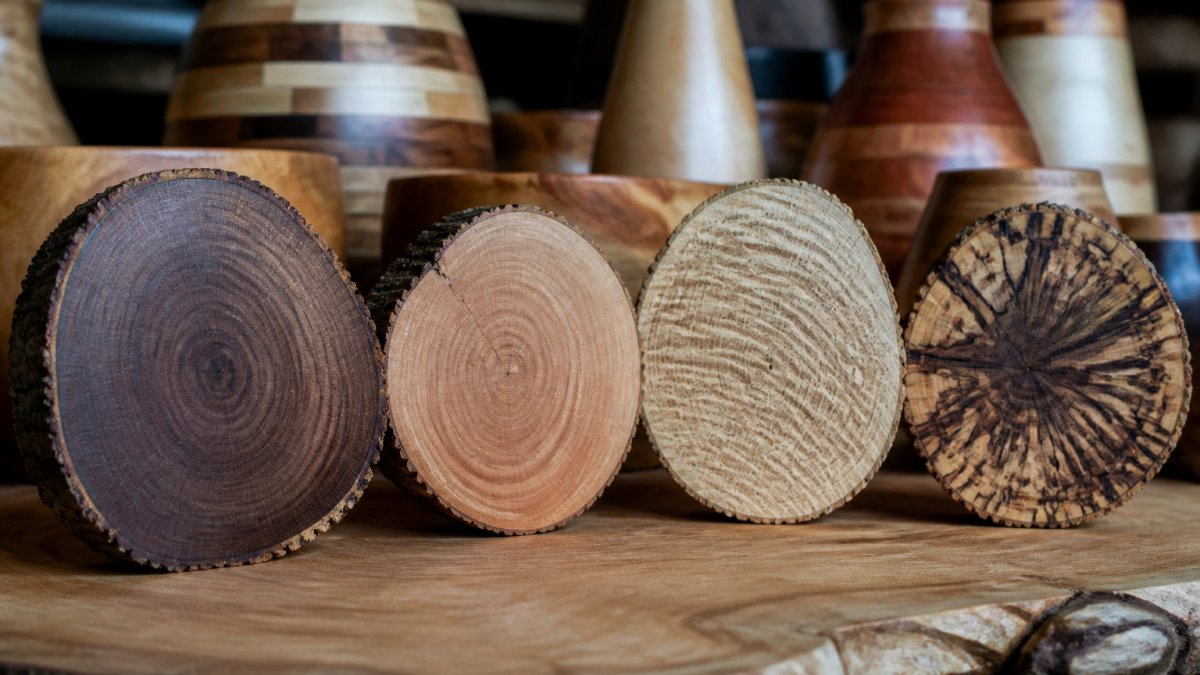
Reclaimed wood presents an interesting choice for vessels intended as heirlooms. Because the wood has already undergone significant seasoning and environmental stress, it's often more stable than freshly milled lumber. However, reclaimed wood requires careful assessment, you need to verify its structural integrity before committing to a piece.
The key insight most collectors miss: wood species matters less than how the wood was seasoned and stored before turning. A poorly dried walnut vessel will move and crack more than a properly seasoned pine one.
How Construction Methods Shape Vessel Longevity
The way a vessel is constructed determines how it will respond to environmental stress over time. There are three primary construction approaches, each with different durability profiles.
Hand-turned vessels represent the most traditional method. A single block of wood is mounted on a lathe and shaped from the outside. This approach creates a monolithic form with consistent grain direction, which generally provides good structural stability.
Carved vessels involve removing material from a solid block to create hollow forms. This method allows for sculptural complexity but concentrates stress at the thinnest points. Durability depends heavily on wall thickness and grain orientation.
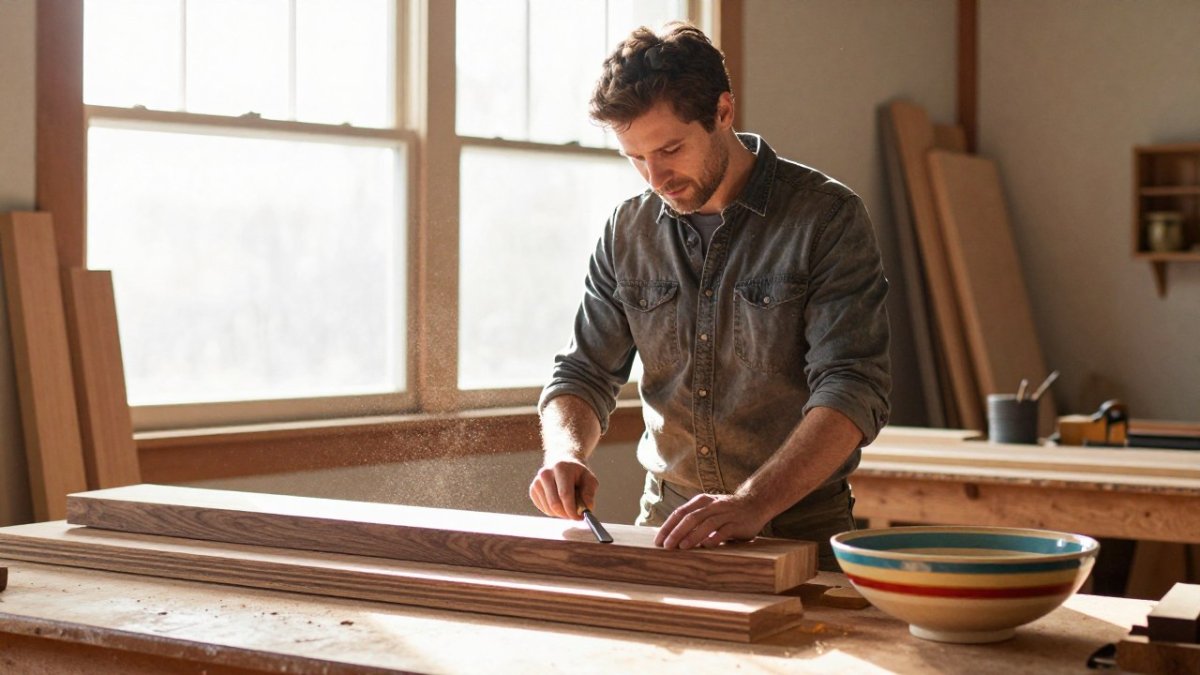
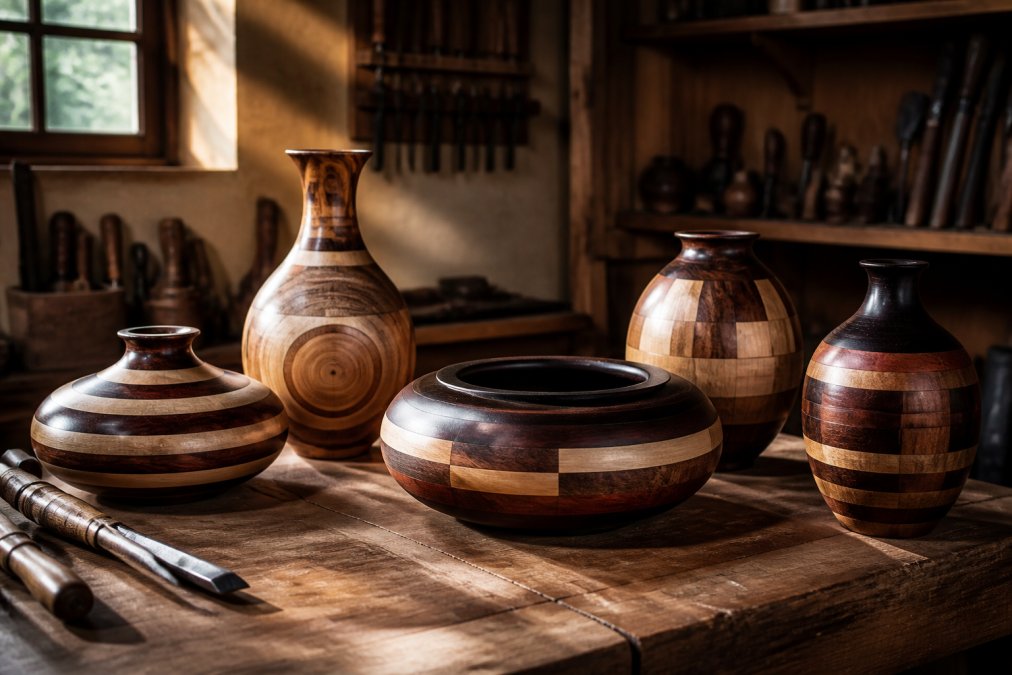
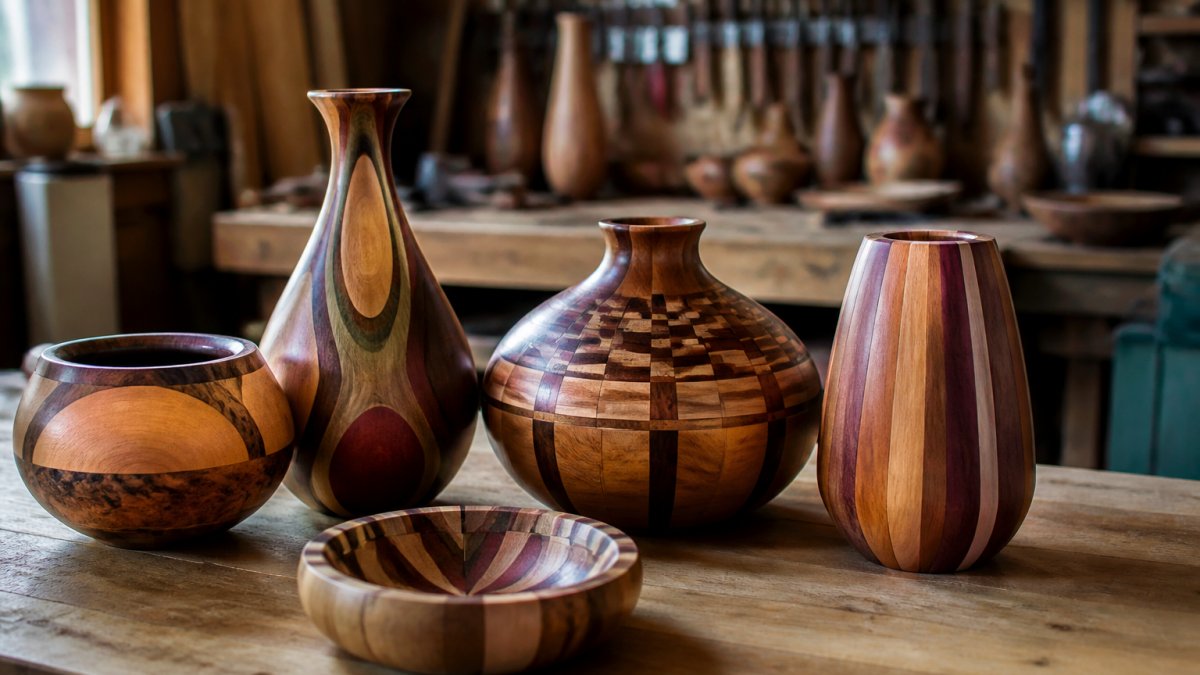
Segmented construction, where the artist glues together carefully selected pieces of wood, offers superior durability for complex artistic forms. By controlling grain direction and wood movement in each segment, makers can create vessels that resist warping and cracking far better than turned or carved alternatives. DGK Design employs segmented construction techniques.
Assembled vessels using multiple joined components require precise joinery. If joints are weak or adhesives fail, the entire structure compromises. Quality craftsmanship in joinery directly correlates with how long these pieces survive.
The real difference in durability comes down to this: does the construction method account for how wood naturally wants to move? Makers who anticipate wood movement and design around it create more durable vessels. Those who ignore it create beautiful pieces that deteriorate.
Wood Vessel Finish Types and Their Protective Role
A vessel's finish is its first line of defense against moisture, dust, and UV damage. The type of finish you choose dramatically affects both the aesthetic and the lifespan.
Oil finishes, including tung oil, linseed oil, and specialized wood oils, penetrate the wood surface and enhance grain visibility. They provide moderate protection and develop a natural patina over time.
Beeswax finishes create a subtle luster and offer decent protection for display vessels not exposed to direct moisture. Beeswax is food-safe and has been used for centuries, but it requires periodic maintenance and provides limited protection against humidity swings.
Lacquer and polyurethane finishes create a harder protective barrier. They resist moisture more effectively and require less frequent maintenance. The trade-off: they can obscure wood grain and may look less natural than oil finishes.
Water-based finishes have improved dramatically in recent years. They dry quickly, emit fewer VOCs, and provide solid protection. They're increasingly popular among makers focused on sustainability without sacrificing durability.
The finish maintenance schedule matters as much as the finish type itself. A well-maintained oil finish outperforms a neglected lacquer finish every time. When selecting a vessel, ask the maker what finish was applied and what maintenance schedule they recommend.
Different finish types offer varying levels of protection and require different maintenance schedules.
| Finish Type | Protection Level | Maintenance Schedule |
|---|---|---|
| Oil finishes | Moderate | Every 6 to 12 months |
| Beeswax finishes | Decent | Periodic maintenance required |
| Lacquer and polyurethane | High moisture resistance | Less frequent maintenance |
| Water-based finishes | Solid protection | Low VOC, quick drying |
Environmental Conditions That Affect Wooden Sculpture Lifespan
Where you display your wooden vessel matters as much as what it's made of. Wood responds directly to humidity and temperature changes, and these environmental factors are the primary driver of structural failure in wooden art.
Humidity fluctuations cause wood to expand and contract. A vessel in a climate-controlled interior environment experiences far less stress than one near a window or in a room with seasonal humidity swings.
Direct sunlight accelerates finish degradation and can cause uneven fading and surface checking. UV exposure breaks down protective coatings and the wood's surface fibers. Position vessels away from south-facing windows or use UV-filtering window treatments in rooms where they're displayed.
Heat accelerates finish breakdown and can cause localized wood movement. Keep vessels away from heating vents, radiators, and direct heat sources. A stable, moderate temperature environment is ideal.
Temperature swings are actually more damaging than a consistently cool or warm space. Rapid heating and cooling create differential expansion that stresses wood fibers. Avoid displaying vessels near doors, windows that experience temperature extremes, or air conditioning vents.
The practical takeaway: the most durable vessel in an unstable environment will deteriorate faster than a moderately constructed vessel in ideal conditions. Environmental control is often more important than construction quality.
How to Care for Wooden Art and Extend Its Life
Proper maintenance extends the life of a wooden display vessel significantly. The care routine depends on the finish type and the vessel's intended use.
For oil-finished vessels, dust gently with a soft cloth every few weeks. Once or twice yearly, apply a fresh coat of oil to maintain water exclusion and patina development. Use a cloth to apply thin, even coats and buff away excess. This simple maintenance prevents drying and checking.
For lacquered or polyurethane-finished vessels, dusting is sufficient for most situations. These harder finishes don't require regular oil application. If the finish becomes dull, light buffing with a soft cloth can restore luster without requiring full refinishing.
Avoid cleaning wooden vessels with water or harsh chemicals. Water penetrates finishes and causes swelling and warping. If a vessel needs cleaning, use a barely damp cloth and dry it immediately. Never submerge a wooden vessel or expose it to prolonged moisture.
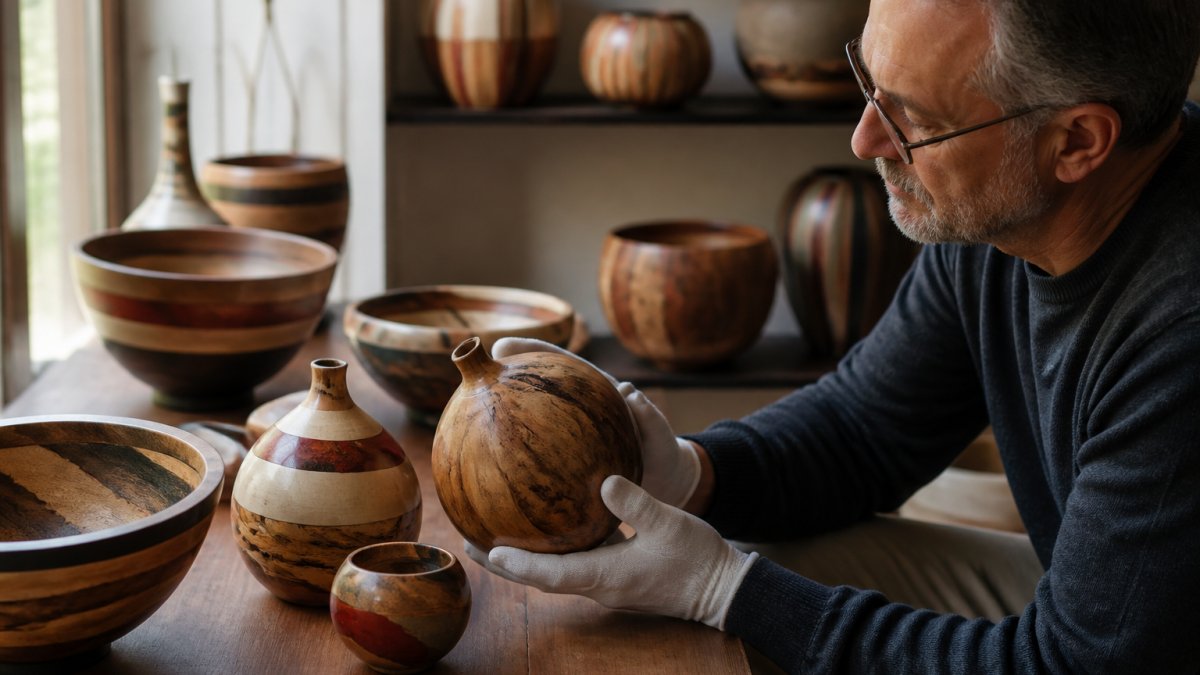
Handle vessels with clean, dry hands. Oils and moisture from skin can damage finishes over time. If you move a vessel frequently, use soft cotton gloves to minimize contact.
Store vessels in stable, moderate conditions if they're not on display. Wrap them loosely in acid-free tissue paper to protect from dust without trapping moisture. Avoid plastic wrapping, which can trap humidity and promote mold growth.
Assessing Condition and Repair Options for Wooden Vessels
Before purchasing an artistic wooden vessel, knowing how to evaluate its current condition helps you understand what you're investing in and what maintenance lies ahead.
Look for surface cracks, checking, or splits. Small surface checks are cosmetic and don't affect structural integrity. Deep radial cracks that run from the center outward suggest the wood wasn't properly seasoned or has experienced severe humidity swings.
Warping or visible distortion indicates either poor construction or past environmental stress. Minor warping is common and doesn't affect a display vessel's function, but severe warping suggests the wood wasn't properly selected or the environment was unstable.
Finish condition matters. Peeling, flaking, or dull, cloudy finishes indicate the piece hasn't been maintained.
Minor repairs, refinishing, light sanding, or reapplying oil, are straightforward maintenance tasks. Many collectors handle these themselves or work with local woodworkers.
Structural repairs involving broken joints, large cracks, or significant damage require a conservator with experience in wooden art. These repairs are expensive and should only be undertaken if the piece has significant artistic or sentimental value.
The honest assessment: some damage is permanent. A severely cracked vessel or one with failed joinery can be stabilized but rarely returns to its original condition. This is why understanding durability before purchase matters so much.
Choosing a Vessel Built to Last Generations
When you're evaluating artistic wooden display vessels, focus on the elements that actually predict longevity. Ask makers about wood species, seasoning time, and construction method. Request information about the finish and its maintenance schedule.
A vessel truly built to last combines several factors: a hardwood species with natural decay resistance, proper seasoning, thoughtful construction that accounts for wood movement, a protective finish suited to the display environment, and reasonable maintenance expectations.
DGK Design's segmented construction approach, combined with careful wood selection and sustainable materials, creates vessels. The polychromatic woodturning technique and incorporation of dyed birch veneers add artistic complexity while maintaining structural integrity.
The vessels you select should match both your aesthetic preferences and your commitment to care. A stunning piece that requires monthly maintenance is only right if you're willing to provide that care.
Consider your vessel a long-term investment in art. The durability of artistic wooden display vessels, and your satisfaction with that piece, depends on informed choices made before purchase and consistent attention afterward.
Choosing the right wooden vessel means understanding what makes it durable in the first place. The intersection of wood species, construction quality, finish protection, and environmental stability determines whether your piece becomes a family heirloom or requires replacement within a decade.
Frequently Asked Questions
How long do wooden sculptures last?
Wooden sculptures can last centuries if made from durable hardwoods and properly maintained. Factors like wood species, finish quality, and environmental conditions determine longevity. Turned vessels from decay-resistant woods like walnut or cherry, sealed with protective oils or waxes, often remain structurally sound for 50-100+ years with routine care. Display pieces in stable indoor environments last longer than functional vessels exposed to moisture and temperature swings.
What factors affect the durability of a wooden display vessel?
Seven key factors influence durability: wood species and natural extractives, construction method (turned, carved, or segmented), finish type and reapplication schedule, humidity and temperature stability, sunlight exposure, handling practices, and storage conditions. Hardwoods with high decay resistance, segmented construction that reduces cracking risk, quality oil or wax finishes, and stable indoor display environments all extend lifespan significantly.
Can sunlight or humidity damage a wooden vessel?
Yes, both damage wooden vessels. UV light fades color and degrades surface finishes, while humidity causes wood to absorb and release moisture, leading to warping, cracking, and splitting. Ideal conditions maintain 30-50% relative humidity and avoid direct sunlight. Vessels displayed near windows, heating vents, or in damp basements deteriorate faster. Stable, climate-controlled interiors protect vessels from these environmental stressors.
Can a cracked wooden vessel be repaired?
Yes, cracks can often be repaired depending on severity and location. Minor surface cracks may be sealed with wood filler and refinished. Structural cracks affecting the vessel's integrity benefit from professional conservation treatment. A conservator can assess whether the crack is stable or active, recommend appropriate repair methods, and restore the finish to match the original. Preventive care, maintaining stable humidity and avoiding temperature extremes, stops most cracks before they develop.