 How-to
Styling Wooden Vases in Modern Homes: A How-To Guide
Quick Summary
To style wooden vases in modern homes, first match the vase to the surface, keeping it about one-third the height of the surface behind it. Choose a finish and grain that suit the room, then fill it with a few loosely arranged stems so the wood stays visible.
- Measure the surface before shopping so the vase feels proportional
- A vase roughly one-third the height of the surface behind it looks balanced
- Place vases in groups of two or three at varying heights on shelves
- Use a glass or plastic insert to keep water away from the wood
- Keep vases away from direct heat and sunny windows to protect the finish
Table of Contents
- Choosing the Right Wooden Vase for a Modern Space
- Where to Put Vases in the House
- What to Put in a Modern Vase
- Building a Wooden Vase Centerpiece Step by Step
- Styling Wooden Vases for Specific Interior Styles
- Caring for Wood Vases and Keeping Them Functional
- Booking Your Handcrafted Vase at DGK Design
- Frequently Asked Questions
Choosing the Right Wooden Vase for a Modern Space
Last Updated: November 19, 2026
Wooden vases bring warmth and texture into modern homes, but the wrong size or finish can make them look out of place. Styling wooden vases in modern homes is a balance of form, scale and wood character. Get those right and a single vessel can anchor an entire room.
Start with the room, not the vase. A vase should feel proportional to the surface it sits on and the space around it.
- Measure the surface before you shop
- Note the light the room gets during the day
- Decide whether the vase will be decorative, functional or both
Matching Vase Size to the Room
A vase that is too small disappears on a sideboard, while one that is too tall can crowd a low shelf.
For most modern spaces, a vase that is roughly one-third the height of the surface behind it looks balanced. On an entry table, a slim, tall piece works well. On a coffee table, choose a wider, lower form that holds a loose arrangement without blocking sightlines.
Wood Finish and Grain: Picking the Right Look
Wood finish shapes the mood of a room.
Grain pattern matters too. Bold, visible grain adds visual weight and texture, so pair it with simple furnishings. Subtle grain works well when the rest of the room is busy.
Where to Put Vases in the House
Place wooden vases where they catch the eye without getting in the way. Entry tables, console tables, dining centerpieces and bookshelves all work well.
Keep vases away from direct heat sources and sunny windows for long stretches, since strong light can dry and fade the finish over time.
- Entry tables: one tall vase makes a strong first impression
- Shelves: place vases in groups of two or three at varying heights
- Dining tables: keep the centerpiece low enough for guests to see across the table
What to Put in a Modern Vase
The best filler depends on the look you want.
Pairing Botanical Stems with Wood
Wood and greenery pair naturally. Eucalyptus, olive branches and pliable stems with a soft, organic shape look especially good in a wooden vessel. Choose stems that are flexible enough to arrange loosely, so the wood stays visible.
A common mistake is overcrowding the opening. Use a few stems and let the form of the vase do the work.
Dried, Sculptural, and Empty Vase Options
Dried grasses, pampas plumes and sculptural branches add height and texture without needing water. An empty wooden vase is also a valid choice on a shelf, where its shape and grain are the focus.
Building a Wooden Vase Centerpiece Step by Step
Follow these steps to build a centerpiece that looks intentional:
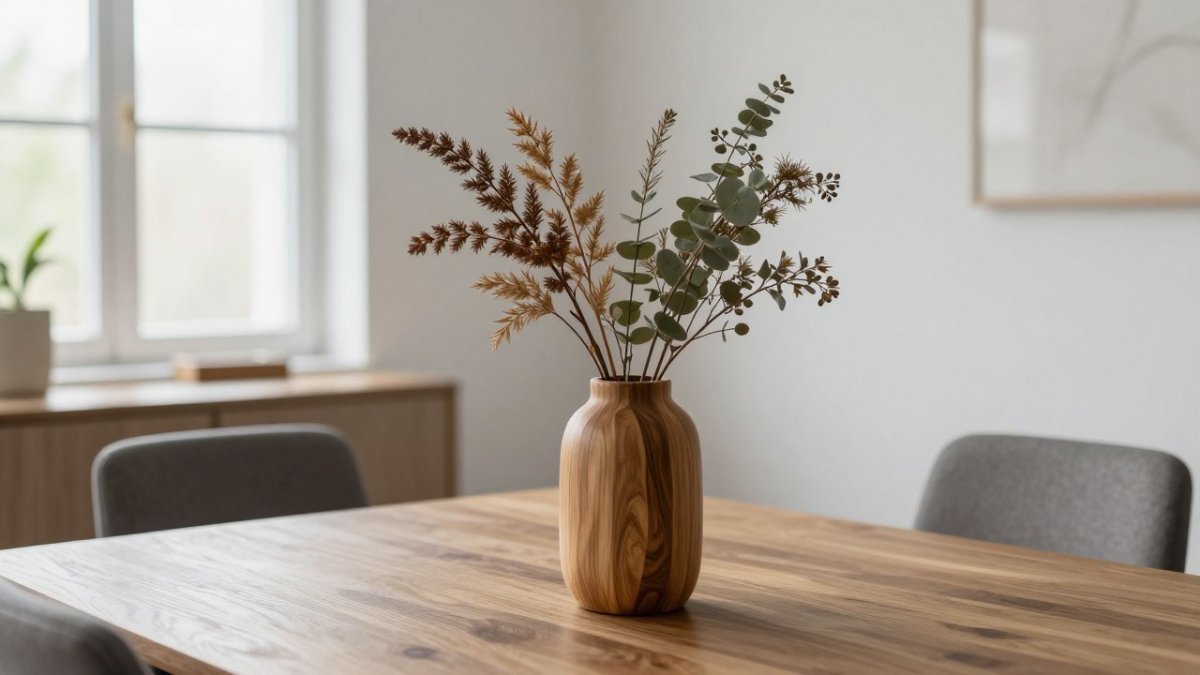
- Choose a vase in the right scale for your table
- Cut stems so they sit about one to two inches above the rim
- Start with two or three anchor stems at the center
- Add secondary stems at angles to fill out the shape
- Step back and remove any stems that crowd the wood
Styling Wooden Vases for Specific Interior Styles
Wooden vases adapt to different interiors. In a rustic farmhouse room, pair a rough-finished vase with dried florals and linen. In a minimalist space, choose a single smooth vessel with one stem. For a modern eclectic look, mix two wood tones and let the shapes contrast.
Caring for Wood Vases and Keeping Them Functional
Most styling guides stop at how a wooden vase looks. The harder question, and the one that decides whether the piece survives, is how to use it with real water without ruining the finish. Wood moves with moisture: it swells when wet and shrinks as it dries, and repeated cycles can open seams, lift a film finish, or leave dark water stains in the grain.
Waterproofing Options, Ranked by Protection
- Glass or plastic insert (best protection): a slim glass test tube or a food-grade plastic liner holds the water entirely away from the wood. This is the safest option for fresh stems and the one most makers recommend. Match the insert diameter to the opening so it does not rattle.
- Sealed interior (moderate protection): a film finish such as polyurethane or lacquer applied inside the vessel slows water absorption but does not stop it over time. Reapply if the interior feels rough or dull.
- Beeswax or paraffin interior coat (light protection): a common traditional approach that slows moisture but needs refreshing every few months and is not reliable for standing water.
- Bare wood (no protection): fine for dried stems and empty display, but not for fresh water. A bare interior will stain and may crack along the grain.
A Practical Fresh-Flower Routine
- Use a liner whenever the vase will hold water for more than a day.
- Empty and dry the liner daily; do not let water sit against the wood rim.
- If water does reach the wood, blot it immediately and let the piece air-dry away from heat.
- Refill with cool water and re-cut stems every two to three days, as you would with any vessel.
Cleaning and Re-Oiling
Wipe the exterior with a dry or slightly damp cloth and dry it right away. Avoid soaking, dishwashers, and household sprays that contain alcohol or ammonia, which dull a film finish. For oiled and hardwax-oiled pieces, re-oil once or twice a year with a food-safe wood oil: apply a thin coat, let it sit briefly, and buff off the excess. Film-finished pieces do not need oil; a soft dry cloth is enough.
Storage and Seasonal Care
Store wooden vases out of direct sun and away from radiators and forced-air vents, since strong light and dry heat fade the finish and encourage checking. In very dry winter air, a humidifier in the room helps; in humid summer air, keep the piece out of damp basements. A vase used only for dried stems can be stored empty, but avoid sealing it in a plastic bag, which traps moisture.
Watch out: a vase that has held water without a liner may look fine on the outside while the interior has already darkened, check inside with a flashlight before buying a vintage or secondhand piece.
The article ranks waterproofing options for wooden vases from strongest to weakest protection.
| Option | Protection | Key point |
|---|---|---|
| Glass or plastic insert | Best | Holds water entirely away from the wood |
| Sealed interior finish | Moderate | Slows absorption but does not stop it over time |
| Beeswax or paraffin coat | Light | Needs refreshing every few months |
| Bare wood | None | Fine for dried stems only, stains with water |
Booking Your Handcrafted Vase at DGK Design
Pieces from DGK Design are handcrafted. Pricing depends on the piece, quantity and delivery, so visit the DGK Design website for current prices and shipping details. Orders over $350 ship free within the United States.
Ready to find the right wooden vase for your home? Shop DGK Design's handcrafted collection today.
Frequently Asked Questions
What is the best way to display vases in my home?
Place a wooden vase where it can be seen from the main seating area, such as an entry table, sideboard, or coffee table, and leave enough negative space around it so the form reads clearly. Choose one focal vase per surface rather than several competing pieces. Vases with a visible wood grain look best against neutral walls and in natural light, where the finish and grain show their character. Rotate the vase occasionally so the stems and the vessel itself stay in balance, and check that the piece is stable on uneven surfaces before adding weight.
Can wooden vases be used as centerpieces?
Yes. A wooden vase works well as a centerpiece because its visual weight anchors a table without overwhelming it. Pick a size that is roughly one-third the length of the table for a dining setting, and keep the arrangement low enough that guests can see each other across it. Pair the vase with a few botanical stems or a single sculptural branch. Wood vessels are also useful on console tables and shelves where a centerpiece-style display is needed.
What should I put in a modern vase?
Modern vases suit sparse, intentional arrangements. Single stems of eucalyptus, olive branches, dried grasses, or a few pliable stems shaped into an open curve all work well with a wooden vessel. You can also leave a wood vase empty as a sculptural accent, or fill it with decorative objects such as smooth stones or a single dried pod. Keep the number of elements low so the wood grain and organic shape of the vase stay visible.
Do wooden vases hold water for fresh flowers?
Most decorative wooden vases are not designed to hold water long term. For dried or stabilized stems, the vase can be used without a liner. Wipe any spills right away and avoid leaving water sitting in the base.